
The Science of Microfoam: How Plant-Based Fats and Proteins Emulsify Under Steam Pressure
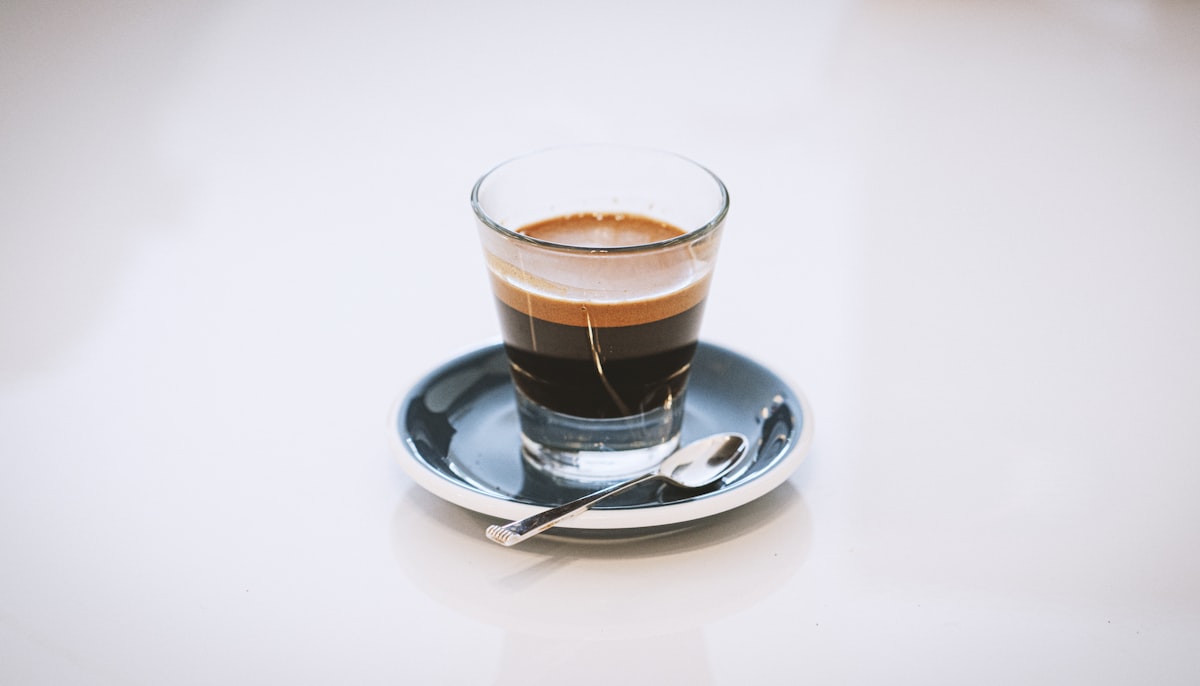
Creating immaculate latte art is widely romanticized as pure visual choreography. Yet behind every glossy rosetta and velvety heart lies an intricate physical science: the thermal denaturation of proteins, the homogenization of suspended lipids, and the stabilization of atmospheric air within a liquid matrix under high steam pressure.
The Physics of Steam Wand Aeration
Commercial espresso machines deliver pressurized steam between 1.2 and 1.5 bars of boiler pressure at temperatures exceeding 250°F (121°C). When you submerge the steam wand tip just beneath the liquid surface, two distinct physical stages occur:
- Aspiration (Stretching): The steam jets create a localized vacuum (the Venturi effect) that drags atmospheric air into the liquid, shearing it into micro-bubbles. This phase must occur between 40°F (4°C) and 100°F (38°C) while surface tension is high.
- Texturing (Vortexing): The wand is submerged slightly deeper and positioned off-center, creating a violent whirlpool vortex that continuously folds surface bubbles down into the hot body of the liquid, shattering coarse bubbles into uniform spheres measuring under 50 microns.
The Dairy Paradigm: Casein and Whey
In bovine milk, structure is maintained by two proteins: water-soluble whey and micellar casein. Between 105°F and 140°F (40°C–60°C), whey proteins unfold (denature), exposing hydrophobic (water-fearing) and hydrophilic (water-loving) amino acid tails. The hydrophobic tails bond to air bubble walls while the hydrophilic tails anchor into the surrounding water, creating an elastic membrane that prevents bubbles from coalescing into coarse foam.
However, if milk is heated past 155°F (68°C), casein micelles completely unravel, and lactose sugars begin to scorch. The protein lattice breaks down, causing immediate foam collapse and a distinctly unpalatable “boiled milk” aroma.
The Plant-Based Revolution: Oat, Almond, and Soy
For decades, non-dairy alternatives were notorious for curdling upon contact with acidic espresso. Because plant milks lack casein, they rely on entirely different molecular architectures to achieve microfoam stability.
Oat Milk: The Power of Beta-Glucan
Specialty barista oat milks are enzymatically treated to convert starches into natural maltose while preserving high molecular weight beta-glucan soluble fibers. Beta-glucan dramatically increases liquid viscosity, providing a dense, luxurious mouthfeel that mimics whole dairy milk without requiring synthetic thickeners.
Furthermore, quality barista formulations incorporate balanced dipotassium phosphate—a food-grade mineral buffer that neutralizes the acute chlorogenic acidity of light-roast espresso, preventing thermal curdling and protein shock.
Almond and Soy: Fat Saturation and Temperature Boundaries
Almond milk contains significantly lower natural lipid and protein content than oat milk. As a result, almond microfoam is delicate and prone to rapid separation. To achieve pristine texture with almond milk, steam stretching must be exceptionally brief, and final pitcher temperature must never exceed 130°F (55°C).
“Microfoam is a liquid foam—an emulsion where the boundaries between air and liquid blur into a mirror-like sheen capable of flowing like wet paint.”
The Barista’s Golden Rules for Flawless Texture
- Start Frigid: Always use milk chilled to 36°F–39°F (2°C–4°C). The colder the liquid, the wider your window of opportunity to incorporate micro-air before reaching denaturation temperatures.
- Listen to the Pitcher: The aspiration phase should produce crisp, gentle “paper tearing” chirps. If you hear loud roaring or bubbling, the wand tip is too low; if you hear loud hissing and splattering, the wand tip is too high.
- Integrate Immediately: Never allow steamed milk to sit idle. Within 15 seconds, air bubbles naturally rise to the surface (syneresis), separating foam from liquid. Continuously swirl your pitcher until the moment of the pour.
Surfactant Dynamics: Understanding the Surface Chemistry of Milk Foam
In physical chemistry, foam is classified as a colloidal dispersion of gas bubbles suspended within a continuous liquid phase. To create a stable foam that resists gravitational drainage (syneresis), the liquid must contain surface-active agents—known as surfactants.
Surfactants possess amphiphilic properties: one end of the molecule is attracted to water (hydrophilic) while the opposing tail repels water and clings to air or lipids (hydrophobic). In dairy milk, beta-lactoglobulin and alpha-lactalbumin fulfill this role. When steam shears air into cold milk, these proteins immediately migrate to the air-water interface, orienting their hydrophobic residues toward the interior of the air bubble, forming a cohesive viscoelastic protective shell.
The Challenge of Thermal Over-Heating and Enzyme Breakdown
A common error in home barista preparation is overheating milk beyond 155°F (68°C). When milk reaches 160°F (71°C), the protein film undergoes irreversible thermal denaturation, completely losing its elastic tensile strength. The bubble walls thin, rupture, and coalesce into large, dry, soap-like bubbles that sit like a stiff dome on top of the coffee.
Furthermore, prolonged heat causes natural lactose sugars to break down, while sulphur-containing amino acids (cysteine) liberate volatile hydrogen sulfide, producing an unpleasant “cooked cabbage” or boiled egg aroma that ruins the delicate floral notes of specialty coffee.
Advanced Steaming Technique for High-Contrast Latte Art
To execute crisp, competition-grade latte art designs (swans, wing tulips, concentric rosettas), your steamed milk must achieve the exact viscosity of wet gloss paint. Follow these three mechanical checkpoints:
- Pitcher Tilt & Angle: Tilt your stainless steel steaming pitcher 15 degrees toward your body and align the steam wand tip slightly to the right of center. This orientation immediately converts the vertical steam thrust into a continuous horizontal vortex.
- The 3-Second Rule: Complete all air introduction within the first 3 to 5 seconds while the pitcher is cold to the touch. Once the milk hits body temperature (100°F/37°C), submerge the tip 5 millimeters deeper and focus solely on spinning the vortex to polish the microfoam.
- The Grooming Tap: Once steaming concludes, firmly tap the pitcher base on your granite counter to dislodge any stray surface bubbles, then vigorously swirl the pitcher in circular motions for 10 seconds until the milk surface mirrors light like fresh enamel.