
The Architecture of Grind Size: Why Micron Consistency Outperforms Expensive Machines
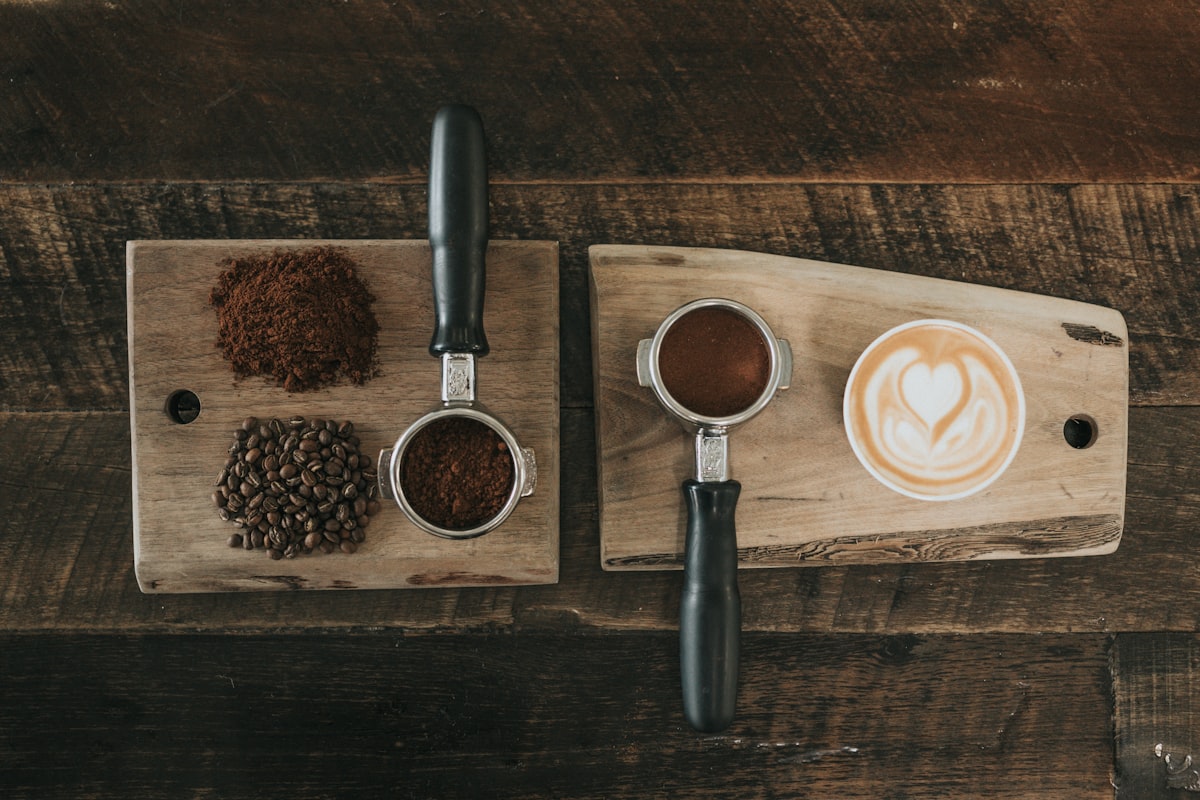
In the specialty coffee sphere, an age-old adage persists: an ordinary brewer paired with an exceptional grinder will consistently outperform a high-end commercial machine fed with an inconsistent grind. While consumer fascination frequently gravitates toward gleaming espresso groupheads and custom wooden steam toggles, the true crucible of flavor extraction occurs at a microscopic scale—in the geometric distribution of shattered coffee bean fragments.
The Physics of Mechanical Fragmentation
When roasted coffee beans pass between two rotating burrs, they do not slice cleanly; they shatter. Roasted cellular plant tissue is notoriously brittle, cellular walls composed of rigid cellulose surrounding lipid-rich cavities. Under rotational compression, beans experience shear and tensile stress until cleavage fractures propagate through the cell matrix.
In standard blade grinders or misaligned ceramic conical burrs, this fragmentation produces a chaotic bimodal distribution: a small percentage of target-sized granules accompanied by massive “boulders” (under-extracted particles) and micro-dust known as “fines” (particles under 100 microns). Understanding this particle spectrum is the master key to diagnosing why a coffee tastes simultaneously bitter and astringent yet hollow and sour.
The Dual Curse of Boulders and Fines
Extraction in coffee brewing is fundamentally a diffusion and dissolution event. When water contacts coffee grounds, soluble compounds dissolve at vastly different rates depending on their molecular weight and the distance water must travel through the particle matrix:
- Fast Extracting Compounds: Organic fruit acids, citrus volatiles, and floral esters dissolve within seconds of surface wetting.
- Intermediate Compounds: Sugars, caramelization products, and balanced chlorogenic acids emerge during core contact.
- Slow Extracting Compounds: Heavy astringent tannins, bitter phenylindanes, and dry pyrolytic residues solubilize last.
When boulders exist in your brew basket, water cannot penetrate to their geometric centers before the brew cycle terminates, leaving bright, pleasant core compounds locked inside and producing a thin, sour, vegetal under-extraction. Conversely, the microscopic fines exhibit immense relative surface area; they over-extract in a fraction of a second, flooding the liquor with rasping bitterness and choking paper filter pores.
The Cold Stone Milling Paradigm
This reality is what prompted Adam Sol Co. to develop our proprietary low-velocity, temperature-regulated stone milling technique for our artisan ground powders. By utilizing genuine granite milling wheels operating at minimal RPM, mechanical friction is kept below 85°F (29°C), preventing the premature volatilization of delicate aromatics such as monoterpenes and aldehydes that give specialty coffee its perfumed aroma.
Furthermore, stone milling provides uniform planar shear rather than high-impact percussive crushing. The resulting grounds possess an exceptionally tight Gaussian particle curve, eliminating the erratic boulders responsible for sour pockets and the runaway micro-fines that cause harsh dryness on the finish.
“Consistency in particle geometry is not a minor luxury; it is the fundamental prerequisite for repeatable, harmonious extraction.”
Calibrating Grind Size to Immersion Velocity
Every brewing methodology demands a calculated balance between surface contact area and percolation duration. To master this balance at home, keep the following architectural guidelines in mind:
- Manual Pour-Over (V60, Chemex, Kalita): Target 450–650 microns (resembling sea salt). Water should drain through a 15g dose in approximately 2 minutes and 45 seconds to 3 minutes and 15 seconds. If drainage stalls past 4 minutes, excessive fines are obstructing the paper weave.
- Espresso and Fine Powder Whisking: Target 180–230 microns. At this threshold, pressurized water (9 bars) creates an emulsion of insoluble coffee oils and carbon dioxide micro-bubbles, resulting in the creamy suspension known as crema.
- Cold Extraction & French Press: Target 800–1000 microns. Extended steeping periods (12–18 hours) necessitate broad surface exposure to mitigate the extraction of wood fibers and bitter cellulose.
Practical Diagnostic Protocol
If your morning brew presents an unpleasantly dry sensation across the sides of your tongue—similar to drinking over-steeped black tea—your grinder is generating excessive fines or your burr alignment has drifted. To verify, sift a 20-gram sample across clean white parchment paper. Look closely under bright light: are the particles uniform in tone and geometry, or do you observe dark boulders resting in a fog of pale dust?
Invest in precise grind quality before upgrading any other component of your coffee bar. When every particle extracts in harmonious unison, bitterness softens into dark cocoa, sharp sourness softens into sparkling malic crispness, and the full sweetness of the coffee terroir is finally allowed to sing.
Mathematical Analysis: The Rosin-Rammler Particle Distribution
To quantify grind dispersion scientifically, coffee sensory labs utilize laser diffraction particle size analyzers. The resulting graph is modeled via the Rosin-Rammler-Sperling-Bennet (RRSB) distribution curve. In an ideal commercial burr set calibrated for single-origin espresso, the dispersion parameter ($delta$) should be as narrow as possible, concentrating 85% of total ground mass within a ±35-micron variance around the central target diameter.
When blade grinders or misaligned cast-iron burrs are used, the RRSB curve flattens dramatically into an erratic multi-modal wave. Microscopic imaging reveals that fines act like particulate cement within the espresso puck: during the initial 3 seconds of 9-bar hydraulic infusion, water forces these micro-fines downward into the lower tier of the filter basket. This phenomenon, known as particulate migration, creates a dense, impermeable sludge layer that forces pressurized water to seek pathways of least resistance. The resulting cracks and fissures are what baristas dread as “channeling.”
Channeling: The Silent Destroyer of Specialty Terroir
When channeling occurs, 70% of the brew water bypasses the majority of the dry coffee bed, rushing through high-velocity micro-tunnels. At the boundary walls of these channels, localized over-extraction reaches catastrophic levels—exceeding 28% extraction yield—leaching astringent polyphenols, bitter chlorogenic quinones, and burnt pyrazines into the cup. Meanwhile, the surrounding un-wetted pockets remain practically raw, yielding under-extracted malic and quinic sourness.
The palate receives an assault of conflicting sensory signals: the tongue’s bitter receptors are overwhelmed by the channeled zones while the sides of the palate register sharp, astringent sourness from the bypassed dry pockets. No amount of roast adjustment or water temperature tweaking can compensate for a flawed particle distribution.
Step-by-Step Burr Alignment & Dial-in Protocol
- The Dry Marker Test: Unplug your grinder, remove the adjustment collar, and apply a non-toxic dry-erase marker across the flat outer lip of the upper and lower burrs. Reassemble and turn the collar by hand until the burrs lightly kiss. Disassemble: if the marker is wiped clean in only one quadrant, your burrs are misaligned and require aluminum foil shimming beneath the low points.
- Purging Stale Retained Grounds: Commercial grinders retain between 1.5g and 5g of ground coffee in the chute. Always purge 2 grams of fresh beans before dialing in your morning shot to prevent rancid, oxidized grounds from contaminating your extraction.
- The Weiss Distribution Technique (WDT): Using ultra-fine acupuncture needles (0.35mm diameter), stir your ground coffee in deep circular motions across the portafilter before tamping. This mechanically dislodges static clumps and equalizes density throughout the puck matrix, ensuring uniform water penetration.