
The Degassing Curve: How Roasted Beans Mature and Why Degassed Valve Packaging Matters
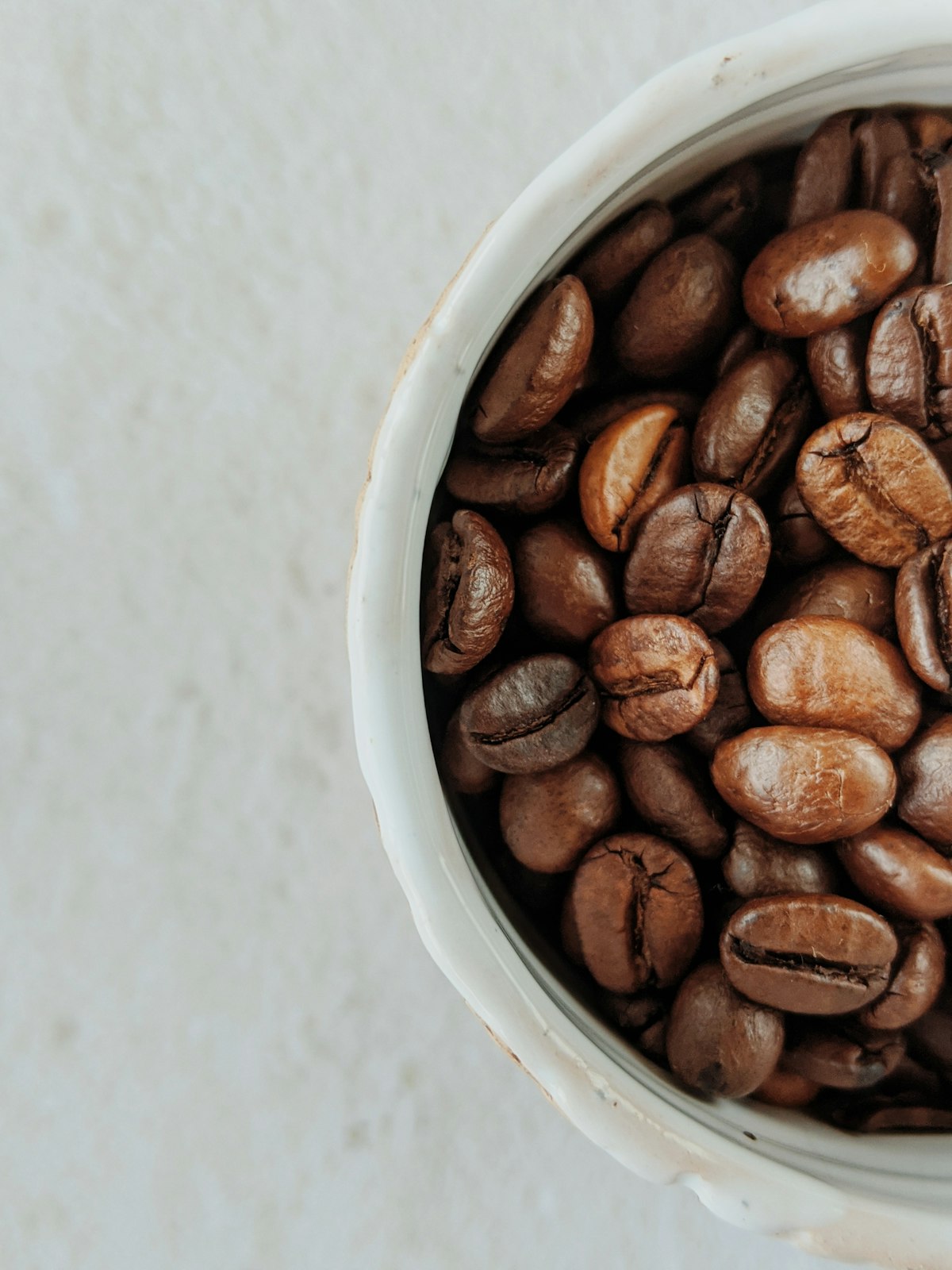
A common misconception among casual coffee drinkers is that coffee beans are at their absolute peak the exact minute they drop from the roaster cooling tray into a bag. In reality, freshly roasted specialty coffee is volatile, chemically unstable, and over-saturated with trapped gases that can severely disrupt extraction.
The Pyrolytic Creation of Carbon Dioxide
During the roasting process, coffee beans undergo complex thermal transformations: the Maillard reaction, Strecker degradation, and sugar caramelization. As internal bean temperatures surpass 380°F (193°C), cellular moisture flashes into steam, causing internal pressure to spike up to 25 atmospheres. This pressure triggers “first crack,” fracturing the cellular structure of the seed.
A major byproduct of this thermal decomposition is carbon dioxide ($). A standard 12-ounce bag of freshly roasted whole bean coffee contains several liters of trapped $ gas within the microporous honeycomb matrix of the bean.
Why Ultra-Fresh Coffee Brews Poorly
If you attempt to brew whole beans within 24 to 48 hours of roasting, the trapped $ rapidly escapes upon contact with hot water. In manual pour-overs, this manifests as a violent, foaming “bloom” where escaping gas bubbles physically push water away from the grounds, preventing proper saturation and creating dry channeling pockets.
In espresso, excess $ causes chaotic, unstable flow: crema appears pale, foamy, and fills half the cup, dissipating within seconds into an unpleasantly sour, metallic, and carbonic tasting shot.
The Golden Degassing Window
To reach peak flavor potential, whole beans require a deliberate resting window where $ dissipates while atmospheric oxygen is kept strictly at bay:
- Light Roast Single Origins: Require 10 to 18 days of resting. Because light roasts preserve cellular density, $ escapes slowly. Peak floral complexity and malic sweetness unlock after day 12.
- Medium Roasts & Espresso Blends: Require 7 to 12 days. The optimal equilibrium between sweet crema development and vibrant aroma occurs around day 9.
- Dark Roasts: Degas rapidly due to porous, cracked cell walls. Optimal flavor window is between days 4 and 14.
“Great specialty coffee does not need to be rushed. Like a fine vintage wine, it demands a period of quiet maturation to reveal its deepest notes.”
The Critical Role of One-Way Degassing Valves
If you seal freshly roasted coffee in an airtight plastic pouch without a valve, escaping $ will balloon the bag until it ruptures. Conversely, if you leave the bag unsealed, oxygen ($) floods the container, initiating oxidative rancidity that degrades volatile aromatic esters into stale, cardboard-like notes within 72 hours.
The solution is the precision one-way degassing valve incorporated into all Adam Sol Co. whole bean bags. This micro-membrane allows internal $ pressure to escape outward while forming an impermeable barrier against incoming ambient oxygen. Combined with our nitrogen-flush packing procedure, beans remain in a pristine, suspended state until the moment you break the hermetic seal.
Kinetic Modeling of Carbon Dioxide Efflux in Hermetic Bags
The volumetric release of $ following roast discharge adheres to an asymptotic decay model. In the first 48 hours, over 50% of all trapped gas is released into the immediate headspace of the package. If sealed in non-valved packaging, internal pressure can exceed 2.2 bar, sufficient to rupture industrial polymer seams.
The rate of degassing is dictated by three thermodynamic variables:
- Roast Degree & Cell Porosity: Dark roasts develop porous, sponge-like internal micro-cavities due to violent cellular fractures during second crack. Consequently, they lose their $ reserve within 7 to 10 days, accelerating oxidation thereafter. High-density light roasts retain compact cellulose walls, releasing gas at a steady, measured pace over 30 to 45 days.
- Ambient Storage Temperature: For every 18°F (10°C) increase in storage temperature, the rate of degassing and subsequent lipid oxidation doubles (the Arrhenius effect). Storing coffee near your espresso machine’s boiler or next to a sunny kitchen window will prematurely age a bag within a single week.
- Atmospheric Humidity: Moisture is coffee’s primary enemy. Water vapor accelerates lipid hydrolysis, turning delicate coffee oils rancid and producing sour butyric and isovaleric off-flavors.
The Freezing Controversy: Scientific Consensus
For decades, traditionalists warned against freezing roasted coffee beans, citing concerns over freezer burn and condensation. However, modern scientific studies spearheaded by the Specialty Coffee Association and academic food labs have conclusively demonstrated that deep freezing beans in airtight, vacuum-sealed bags halts the aging process entirely.
At -4°F (-20°C), molecular motion ceases, halting both $ escape and oxidative decay. Furthermore, when whole beans are ground while frozen directly from the freezer, their cold temperature makes the bean tissue shatter more brittlely, generating a significantly tighter particle distribution with up to 25% fewer micro-fines! If freezing beans at home, always freeze in single-dose airtight tubes or vacuum pouches, and never open a frozen container until it has warmed to room temperature to avoid condensation forming on the beans.
Degassing Dynamics Across Extraction Methodologies
Understanding how degassing intersects with specific brewing equipment allows you to time your bean consumption with surgical precision:
- Aeropress & Immersion Brewers: Immersion methods are exceptionally tolerant of fresh beans. Because water completely surrounds grounds without channeling through a puck, a coffee rested for merely 4 to 5 days will extract beautifully with rich body and zero bitterness.
- Espresso Machines (9 Bar Pressure): The most unforgiving methodology. Pulling a shot from beans rested less than 6 days will produce a volatile, volcanic extraction. The shot will blonde prematurely, channel viciously, and produce thick, pale crema that collapses into sour foam. For espresso, always allow 9 to 14 days of valve resting.
- Manual Pour-Over Drippers: Require a generous 45-second bloom with twice the dry coffee weight in water (e.g., 40g water for a 20g dose) to release lingering gas before initiating main concentric pours.
The Sensory Danger of Premature Oxygen Exposure
Once you break the hermetic seal of your coffee bag, the clock begins ticking. Even with a one-way valve, daily opening introduces fresh air containing 21% oxygen. Over 21 days, unsaturated fatty acids (linoleic and palmitic acids) undergo autoxidation, generating volatile aldehydes and ketones that produce stale, cardboard, and rancid walnut notes. For optimal longevity, transfer unused beans into an airtight vacuum canister or freeze in single-dose glass vials.