
Water Chemistry and Pour-Over Geometry: The Invisible Catalyst in Coffee Extraction
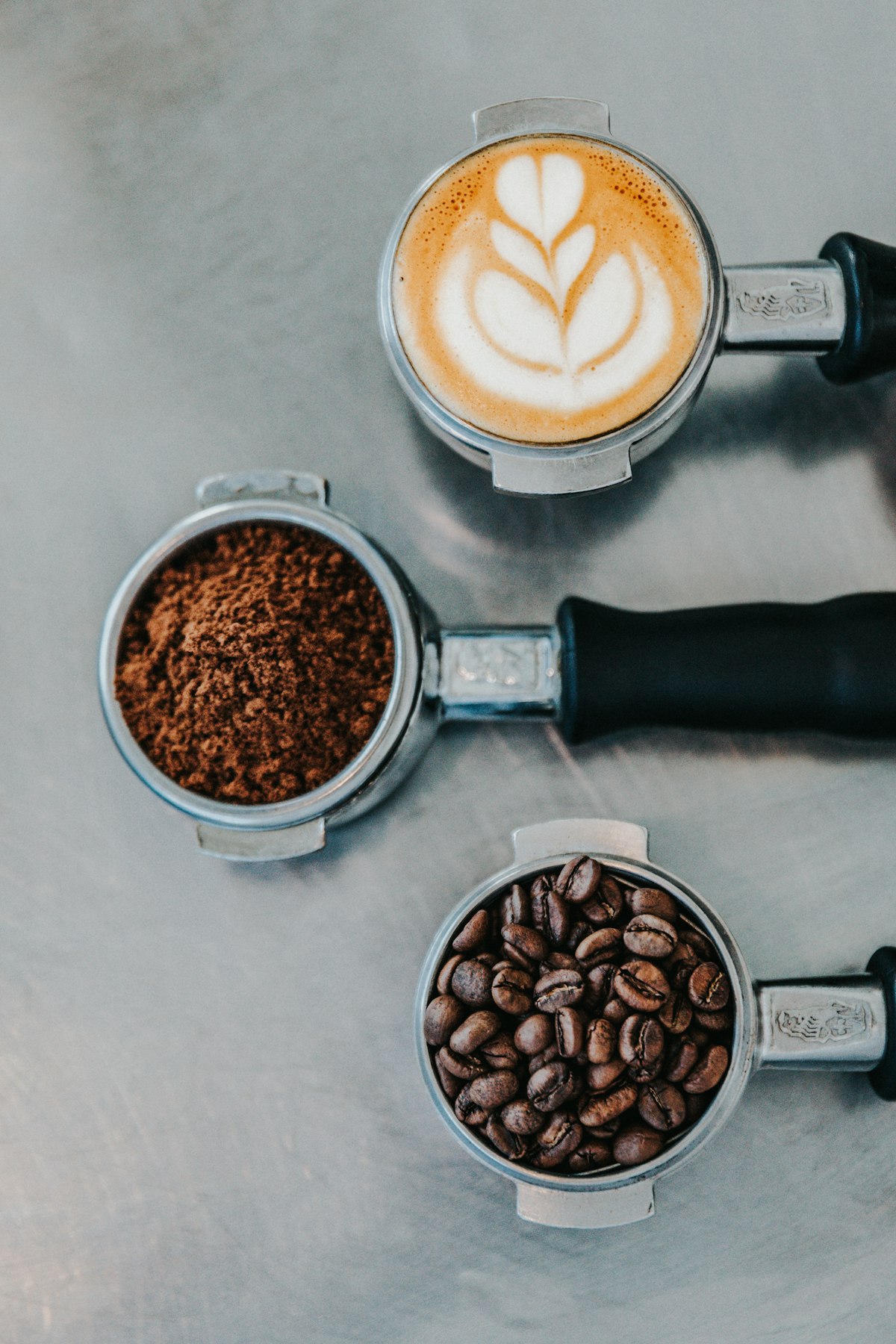
Consider a cup of freshly brewed specialty coffee: approximately 98.5% of what rests in your porcelain mug is pure water. The remaining 1.5% consists of dissolved organic solids and suspended aromatics. It follows by simple mathematics that even the most pristine Gesha coffee bean will taste flat, hollow, or unpleasantly bitter if your water chemistry is deficient.
The Ionic Physics of Water: Magnesium vs Calcium
Distilled water (0 ppm TDS) is an abysmal solvent for coffee. Water requires specific dissolved mineral ions to act as molecular “magnets” that latch onto coffee flavor compounds and pull them out of the cellular matrix:
Magnesium (^{2+}$): The Flavor Attractor
Magnesium ions possess high charge density and small ionic radii. They form powerful coordinate bonds with oxygen-rich organic compounds, specifically targeting the bright, sweet, fruit-forward malic and citric acids present in high-elevation specialty coffees. Water rich in magnesium unlocks sparkling citrus and floral complexity.
Calcium (^{2+}$): The Body Builder
Calcium ions also assist extraction, binding preferentially with heavy sweetness compounds and phenolic lipids. However, excessive calcium readily binds with bicarbonates, causing scale buildup in boilers and pushing the brew toward heavy, chalky over-extraction.
Bicarbonate Buffer (^-$): The Acidity Governor
Bicarbonate acts as a pH buffer. If your water contains zero buffer (under 20 ppm), the natural fruit acidity of specialty coffee will taste unpleasantly sharp and sour. However, if your water contains excessive bicarbonate (over 80 ppm)—typical of municipal hard tap water—it neutralizes all organic acids, turning a vibrant Ethiopian single-origin into a flat, chalky, and muddy cup.
“Water is not a passive vehicle for coffee; it is the active chemical reagent that determines which flavors are born and which remain unexpressed.”
The Ideal Specialty Brewing Water Formula
According to the Specialty Coffee Association (SCA) water standard, your brewing water should measure within these parameters:
- Total Dissolved Solids: 125 to 175 mg/L (ppm)
- Total Hardness: 50 to 175 ppm $ equivalent
- Alkalinity (Buffer): 40 to 50 ppm $
- pH Range: 6.5 to 7.5 (near neutral)
- Chlorine: 0 mg/L (absolute zero)
Dripper Geometry: Conical (V60) vs Flat-Bottom (Kalita)
Once water chemistry is calibrated, the physical shape of your brew vessel dictates fluid dynamics and flow resistance:
1. Conical Drippers (Hario V60)
With a single large opening at a 60-degree angle, water flow is governed almost entirely by the barista’s pouring cadence and grind size. Water travels through a deeper central bed of coffee. Conical geometry promotes high clarity and highlighted acidity, rewarding precise, steady kettle technique.
2. Flat-Bottom Wave Drippers (Kalita Wave, Fellow Stagg)
Featuring a horizontal bed with 3 small restriction holes, flat-bottom drippers maintain a uniform cylindrical column of coffee grounds. Water passes through all sections of the bed at an even velocity, minimizing bed channeling. This geometry yields higher extraction uniformity and rich, rounded body, making it exceptionally forgiving for everyday brewing.
Master your water chemistry and match your dripper geometry to your roast profile. You will discover that the true barrier between an ordinary cup and coffee nirvana is not your coffee bean—it is the invisible mineral alchemy in your kettle.
Water Filtration Technology: Reverse Osmosis with Remineralization
For home enthusiasts and cafe operators seeking the ultimate in extraction consistency, standard charcoal pitchers or tap water filters are inadequate. Charcoal filters remove chlorine and odor, but leave dissolved heavy mineral carbonates completely untouched.
The gold standard in specialty beverage preparation is Reverse Osmosis (RO) paired with precision remineralization. An RO membrane forces tap water through microscopic semi-permeable pores under high pressure, stripping all dissolved salts, minerals, and contaminants down to 0–5 ppm TDS. The pure, blank water is then systematically dosed with food-grade magnesium chloride and potassium bicarbonate to achieve the exact 150 ppm ionic blueprint required by Specialty Coffee Association cupping standards.
The Physics of Concentric Pouring Flow Rates
When brewing manual pour-overs, how water exits the gooseneck kettle spout fundamentally shapes your extraction bed:
- Laminar vs Turbulent Flow: High-end gooseneck kettles feature restrictor valves that ensure water exits in a steady, unbroken glass-like column (laminar flow). Splattering, turbulent flow aerates water excessively, dropping brew temperature by up to 5°F before it even touches the coffee bed!
- Agitation and Slurry Temperature: Pouring from a height of 15 to 20 centimeters introduces kinetic energy that agitates grounds, accelerating extraction. However, pouring along the outer paper walls of the dripper causes “bypass”—water flows down the glass walls directly into the carafe without extracting the coffee bed, leading to a watery, under-extracted cup. Always pour in tight, deliberate concentric spirals starting from the center outward to within 1 centimeter of the edge.
Comparative Analysis: Conical vs Flat-Bed Thermal Stability
Beyond fluid dynamics, the physical material of your brewing vessel heavily influences thermal heat retention throughout a 3-minute pour-over:
- Ceramic & Porcelain: Possess high thermal mass. If not aggressively pre-heated with boiling water for 60 seconds before brewing, cold ceramic will siphon up to 10°F of heat directly out of your brew slurry during the critical first pour, stalling extraction.
- Plastic (BPA-Free Tritan): Surprisingly favored by World Brewers Cup champions. Plastic possesses exceptionally low thermal conductivity, meaning it does not absorb heat from the slurry, keeping water temperature stable from the first drop to the final draw-down.
- Double-Walled Borosilicate Glass: Combines aesthetic clarity with insulated thermal containment, providing the ideal balance for mindful domestic brewing rituals.
The Golden Pour-Over Recipe
For an impeccable morning pour: Grind 20.0 grams of fresh whole bean coffee to medium-fine (550 microns). Heat 320g of mineralized water to 202°F (94°C). Wet your paper filter and discard rinse water. Add grounds and level the bed. Pour 50g water for a 45-second bloom. At 0:45, pour steadily in spirals up to 200g. At 1:30, complete the final pour to 320g (a 1:16 brew ratio). Allow to draw down completely by 2:45. Swirl your carafe, inhale the perfume, and savor.